



Migraine Triggers in Personal Care Items
Everyone has a few favorite personal care products that help them look and feel your best. But could your favorite fragrance, lotion, or shampoo be a migraine trigger?
If you get migraine attacks after showering or applying skincare products and makeup, a personal care product may be to blame. Discover which items in your routine may be migraine triggers and why in this article. Identifying your triggers and changing products may reduce the frequency of your attacks and help you get your life back.
Another way to prevent attacks and relieve migraine pain: CEFALY. Find out if this soothing and effective neuromodulation device is right for you: Try the treatment in your home for 90 days. Shop now.
1. Perfume
Perfumes and deodorants are often an issue for people with migraine because they have strong scents. More than 55% of participants in one study said that perfume was associated with their migraine attacks. Researchers aren’t sure why perfume is a problem for people with migraine, but there are two primary theories — osmophobia and chemicals.
Migraineurs are more likely to have a condition called osmophobia, a hypersensitivity to smell. If you have osmophobia, strong-smelling perfume, soap or deodorant could cause a migraine attack. Even light smells can become unbearable and worsen symptoms. Additionally, perfume may trigger migraine attacks because of the volatile organic compounds (VOCs) in its formula. VOCs are known to cause headaches, especially when they collect in rooms with poor ventilation.
If you suspect strong fragrances exacerbate your migraine, choose fragrance-free products and avoid using perfumes.
2. Hair dye
The chemicals in some hair dyes can cause headaches and migraine attacks. In particular, many people are allergic or sensitive to a chemical called paraphenylenediamine (PPD) in hair dyes. Symptoms of a PPD reaction start with contact dermatitis, which causes red, stinging or burning skin. Allergic reactions release histamine and cause inflammation in the body, which can trigger and worsen migraine. The strong smells that hair dye emits could also cause a migraine attack if you have osmophobia.
If you’d still like to dye your hair but want to reduce the chance of a migraine attack, consider using chemical-free and natural dyes like henna or vegetable-based dyes. Always check the ingredients for allergens like PPD, ammonia, peroxide and resorcinol. Hair dyes may claim to be natural but still contain some chemicals.




3. Shampoo and conditioner
Shampoo can cause migraine attacks for some people because of its ingredients. Most commercially available shampoos contain preservatives like methylisothiazolinone, formaldehyde and sodium benzoate, which can cause an allergic reaction that triggers a migraine attack. Other chemicals — such as the moisturizing agent propylene glycol and cleansing agent sodium lauryl sulfate — could also be an issue.
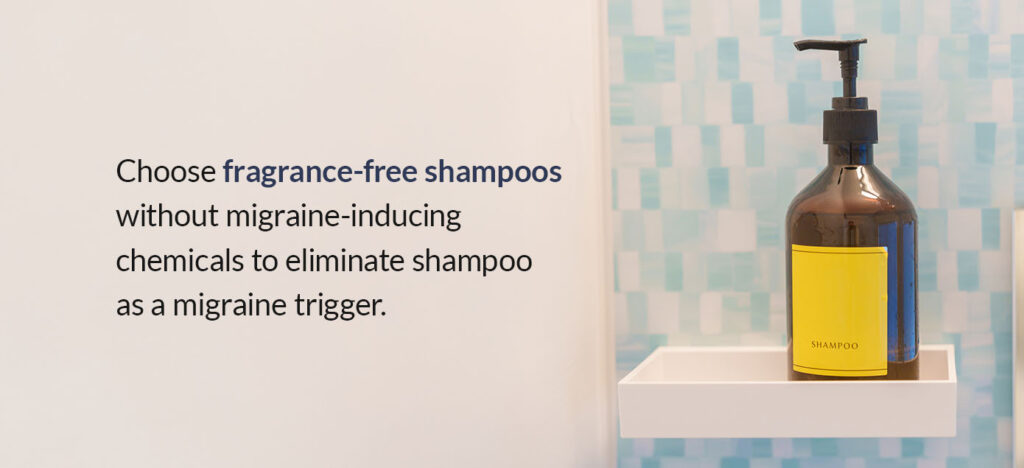
Some shampoos also contain essential oils, which can trigger a migraine attack if you’re allergic to them. If you’re sensitive to strong smells, the fragrances in some shampoos and conditioners could exacerbate your migraine, too. Choose fragrance-free shampoos without migraine-inducing chemicals to eliminate shampoo as a migraine trigger.
4. Makeup and skincare
Other cosmetic products — such as makeup and skincare items — can also trigger migraine. Other than causing allergic reactions, some cosmetics also contain endocrine-disrupting chemicals (EDCs) like phthalates, formaldehyde, parabens and triclosan. These chemicals can interfere with your body’s hormone levels and cause disruptions, which is a common migraine trigger for women.
When choosing makeup and skincare products, look for labels that say paraben-free, phthalate-free and hypoallergenic. You may also want to try natural makeup products that do not contain synthetic chemicals that could affect your hormone levels.
5. Chemical sunscreen
Wearing sunscreen is essential when spending a day in the sun as it protects your skin from harmful UV rays. However, some chemical sunscreens may trigger your migraine attacks. Chemical sunscreens contain compounds that absorb the sun’s UV rays and prevent them from reaching the skin.
Studies show that some of them — like homosalate, octocrylene and oxybenzone — may disrupt hormone levels and cause skin allergies. However, more research is needed to confirm this association. The U.S. Food and Drug Administration (FDA) released a statement in 2020 declaring sunscreens with these chemicals as not generally recognized as safe (GRAS) because there is inadequate data to support a safety finding.
The FDA classifies only two ingredients in sunscreen as GRAS — zinc oxide and titanium dioxide. These ingredients make up mineral sunscreen, an alternative to chemical sunscreens. Mineral sunscreens are less likely to cause allergic reactions, making them a good option for people with migraine.
How to use personal care items without triggering your migraine
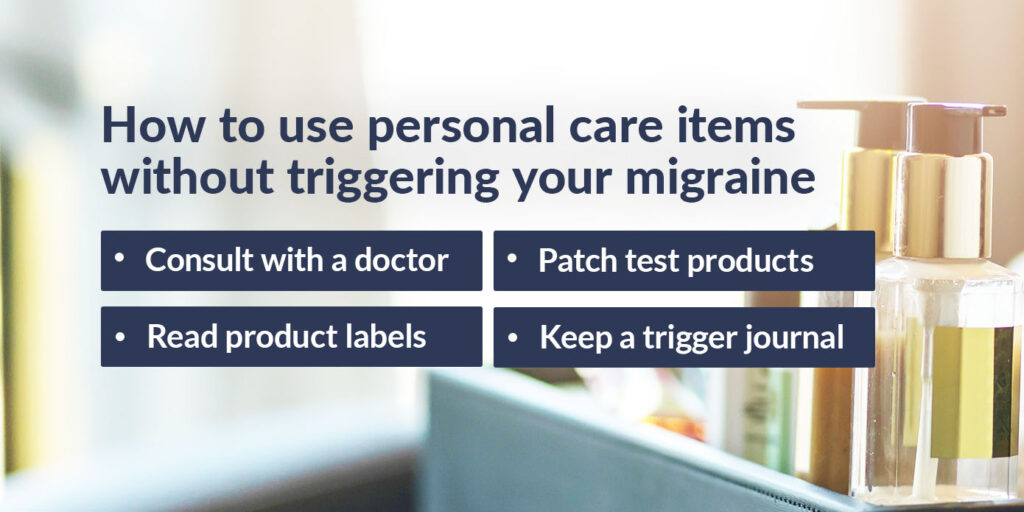
It can be frustrating when you suspect your favorite products are causing migraine attacks. If this is happening to you, follow these tips:
- Consult with a doctor: The first thing you should do if you think a personal care item is triggering your migraine or causing an allergic reaction is to consult your healthcare provider. They can help you determine what the issue is, resolve any symptoms and find alternative solutions.
- Read product labels: Once you’ve found which products or ingredients are triggers, read product labels carefully. Look at the claims on the front and read the ingredients on the back to ensure they don’t contain your triggers.
- Patch test products: After purchasing a new product, try a little bit on a patch of skin to check if it causes an allergic reaction. A good place to patch test is on your forearm, behind your ear or under your jaw. Repeat the patch test for a minimum of seven days to see if a reaction occurs.
- Keep a trigger journal: Most people with migraine have more frequent attacks when they experience multiple triggers. For example, perfume may cause an attack if you’re stressed and slept poorly, even if it wasn’t an issue before. Keep track of your attacks, symptoms and possible causes to identify trends and triggers.
Try CEFALY to prevent and relieve migraine pain
While you try to find out what your triggers are, you may have to deal with more frequent migraine attacks. These can be incredibly painful and disruptive to your daily life. That’s why we created CEFALY, a drug-free migraine treatment device that’s clinically proven to relieve migraine pain. In one study, 79% of CEFALY users had less headache pain after one hour of using the device’s ACUTE treatment mode.
How does it work? The CEFALY device sits on your forehead and delivers small electrical pulses to calm the trigeminal nerve, the primary pathway for migraine pain. CEFALY has two modes — ACUTE and PREVENT. You can use ACUTE to decrease the pain during an attack and PREVENT daily to decrease the frequency of attacks.
Begin your journey toward pain relief by purchasing a CEFALY device today. We offer a 90-day money-back guarantee and flexible payment plans!


Latest Posts

The Essential Guide To Medical Devices For Migraine
CEFALY is an FDA-cleared medical device that targets the main pathway for migraine pain: the trigeminal nerve (the…
Best At-Home Migraine Neuromodulation Devices for 2026
Migraine affects more than 1 billion people worldwide. For people who want a drug-free option that can be…

Best FDA-Cleared Migraine Devices for Adults in 2026
Migraine affects an estimated 40 million people in the United States, and medication is not the right fit…